

A Third Way Forward
Practical advice for leaders in Turning Times

There are two dominant narratives about the future right now:
The first is the collapse narrative.
It’s the logical, analytical, often masculine-coded perspective that looks at the data and concludes we’re headed for disaster. AI is replacing jobs. Wealth concentration is accelerating. GDP and corporate profits are rising while employment shrinks. The middle class is eroding. And don’t even get me started about the environment!!
The conclusion of this narrative is often some version of: we’re doomed.
The second narrative is the good vibes only narrative.
This is what I see a lot in the personal development and coaching world. It’s the narrative that largely ignores the actual systemic crumble underway. It focuses on individual success stories and good vibes only. Look at my six-figure launch. Look at my millionaire morning routine. Follow this strategy and you can have it too. Don’t listen to what they tell you about sales slowing down - keep your frequency high and money will follow.
Both narratives contain pieces of truth. And both are incomplete.
The first can become paralyzing. It sees the problems clearly but often leaves us stuck in fear or anger.
The second can become bypassy. It focuses on possibility but ignores the challenges that come along with birthing the new.
What I’m interested in is a Third Way.
A way that looks directly at the data, the trends, and the cycles we’re in — while also recognizing that the transition we’re in isn’t the end of the world - it’s a rebirth.
This is where the frameworks we explored in the previous two parts become useful.
The Fourth Turning helps us understand the societal cycle we’re in.
Astrology shows us the specific energetic patterns that flavor this cycle.
When both are looked at together, a consistent picture emerges:
We are moving out of an era built on centralized power, hyper-individualism, and fragile systems — and into one that will require more resilience, cooperation, and local interdependence.
The question then isn’t “What will happen?”
It becomes: How do we adapt our lives and leadership to honor this transition?
Below are five specific recommendations that are supported by both frameworks.
1. Reinvest in Local Community
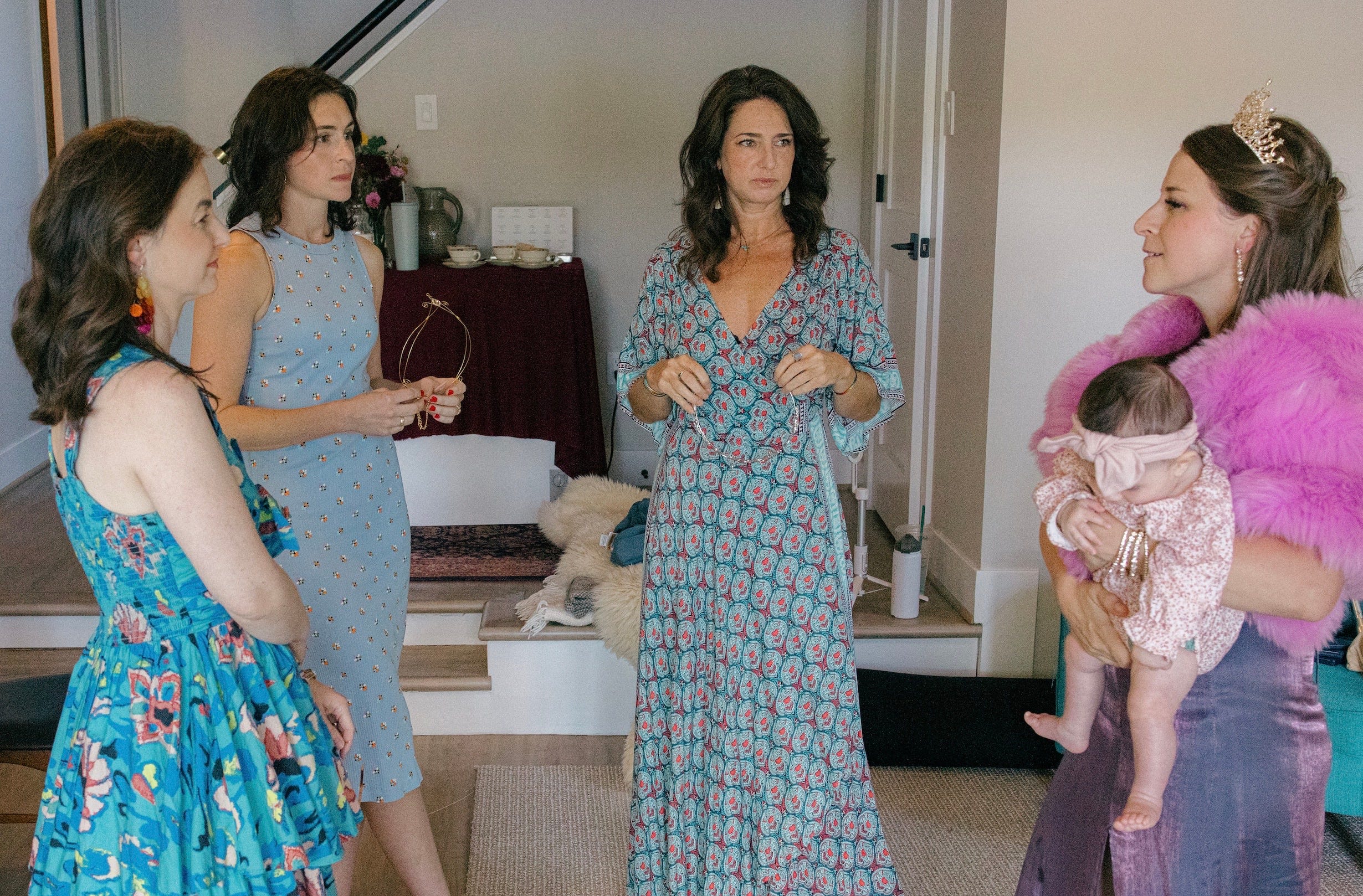
If there is one through-line that appears in both the Fourth Turning framework and the astrology of this moment, it’s the importance of local networks and proximity-based relationships.
In Fourth Turning Winters, large institutions weaken. When that happens, the people and resources closest to you become the most reliable.
Astrologically, we see this reflected in the rise of Aquarian themes — community, decentralized systems, and collaborative networks — alongside Uranus shifting into Gemini, which reshapes communication and information exchange in ways that often drive people back toward smaller, more trusted circles.
The takeaway is simple: Local community becomes infrastructure. Not just practically, but emotionally.
What this can look like
I started a local in-person women’s circle again after years of hosting primarily online.
I’m also in conversation with a few other moms from my son Flynn’s preschool about creating a cooperative summer camp. The idea is simple: instead of each family individually scrambling to schedule childcare all summer, we share the responsibility.
Some days one parent hosts. Some days another does. The kids get play, learning, and socialization. And the load becomes lighter for everyone.
We can apply this same principle to business.
In business, local community might look like:
Referral networks instead of paid-ad dependency
In-person events or retreats as your signature offers instead of online offerings with the occasional in person
Partnerships with nearby businesses or practitioners
Focusing on local communities (even if they are not 100% “value aligned”) over high niche online communities
In Turning Times, trust and physical proximity become assets.
2. Think Generationally, Not Just Individually
The second shift we’re being asked to make is moving from hyper-individualism toward thinking systemically and generationally.
In the Fourth Turning framework, the transition from Winter to Spring represents exactly this shift. Crisis eras (which, I will remind you, we are currently in) push societies away from extreme individualism and back toward collective responsibility and shared care.
We see the same theme in the astrology.
With the North Node and Pluto in Aquarius, the focus turns toward the whole rather than the part. Aquarius is concerned with systems, networks, and the collective future. It asks us to zoom out and consider how our actions impact the broader ecosystem we’re part of.
This is actually one of the core skills we train inside my Matriarchal Leadership work.
Matriarchal Leadership isn’t about centering one individual or consolidating power at the top. It’s about making decisions based on the well-being of the entire ecosystem — or “win win win” decisions as I call them.
In contrast, much of the leadership we’ve seen over the past several decades has prioritized the individual, the brand, the profit center, or the corporation over the well being of the larger system.
That model is reaching its limits.
The invitation now is to start asking: How does this decision affect the whole? Is there another alternative that better serves everyone involved?
What this can look like
One of the biggest shifts our family has made recently reflects exactly this principle.
I’ve been the primary breadwinner in our household for several years. I wasn’t working full-time, but I was working multiple days a week while Colin held down more of the home responsibilities.
When I came back from maternity leave with Sadie, it became very clear that this setup wasn’t serving the whole of our family anymore.
Yes, on an individual level, I was getting more time for work that I loved, and that was a “win.”
But the larger system — our home — was struggling.
Colin was stretched. The kids were feeling it. And ultimately, I was feeling the strain too.
So we made a shift. I started working less.
I still run my business. I’m still deeply committed to the work I do in the world. But I’m spending more time at home and more time with the kids.
And almost immediately, the atmosphere in our home shifted.
Everyone felt better.
This kind of decision requires discernment — and sometimes trade-offs. I don’t love the word sacrifice, because it implies giving up something that matters. But there are moments where we have to re- balance priorities so the entire system can function better.
And when we do that, something surprising often happens: the whole becomes stronger.
In business thinking generationally can look like:
The end of the guru brand. Movement or community centered companies will prevail in this season.
More long term thinking, instead of just focusing on quick wins or what benefits the business now.
With that, more of a focus on how decisions affect children and future generations

3. Prioritize Resilience Over Efficiency
Much of modern capitalism has been built on efficiency: maximize revenue, minimize expenses, streamline operations, and increase margins.
Efficiency rewards speed, specialization, and lean systems.
But in a Winter season, that model becomes fragile.
When conditions are unpredictable — economically, politically, technologically — systems designed purely for efficiency tend to break under pressure. They don’t have the flexibility to absorb shocks.
If you think about it in seasonal terms, animals don’t go into winter lean and optimized. They put on weight. They store energy. They build reserves so they can survive periods where food is scarce or conditions are harsh. Those that are resilient survive.
What this can look like:
The past two years I began noticing a shift among many of the big-name coaches and feminine business owners I follow. The model of the large, siloed team where every person has one very specific role started giving way to smaller, more adaptable teams.
Instead hiring an OBM, a VA, a tech VA, a social media manager, a community manager, many business owners started consolidating into one or two key collaborators — people who could move between roles and respond to change.
I made a similar shift inside my own business.
In early 2025, I transitioned away from a larger team where each person had a narrowly defined job and instead brought in one person who works much more collaboratively with me (hiii Jenna!). Someone who can jump into different areas of the business and adapt as things evolve.
That kind of flexibility is a form of resilience.
It’s not always the most optimized structure. But it’s much more capable of weathering change.
And that, more than pure efficiency, is what businesses will need in the years ahead.
In business building resilience can look like:
Liquid savings. Money held in cash or cash equivalents, not all tied up in the stock market.
Leaner teams where everyone is dialed in the vision of the company and willing to do different jobs to achieve that vision.
Owning your audience (email, Substack, own app or platform)
Multiple pathways to revenue (not just one optimized funnel). This doesn’t mean creating a million different offers but rather many ways for folks to get to your primary offer.

4. Practice Discernment & Accept Trade-offs
In a Winter season, resources are tighter—time, energy, capital, attention. When resources tighten, we naturally become more selective about how we use them.
Winter asks us to conserve, refine, and focus.
We see this reflected in the astrology as well, particularly with Saturn and Neptune in Aries.
Neptune represents the dream. Aries represents action. Saturn introduces structure and limitation. Together they create a dynamic where there is still vision and fire—but we are asked to bring those dreams into practical, embodied reality.
This is where discernment becomes one of the most valuable leadership skills of this era.
What this can look like:
Historically I’ve been someone who is very prolific. I’ve created many different programs, workshops, and containers. I love teaching and creating new spaces.
But this year, our primary focus is The MOTHERMIND. We’re building around everything else to pour into it rather than constantly launching new things.
And I’ll be honest—it feels a little strange.
I’m used to creating constantly. But this level of focus also feels powerful. It allows us to pour our attention into making one thing exceptionally impactful rather than scattering energy across many directions.
In business discernment can look like:
Focusing primarily on one core offer, one core promotion channel, one core trasnformation
Saying “no” more often. Have a clear decision filter to support you in this. Does this move the needle forward? or my favorite Does this contribute to our bottom line of profit or joy? are great questions to ask yourself
Invest in improving what already exists (client experience, products & services that are working) vs creating something totally new from scratch
Being realistic vs hopeful in your planning. This isn’t really the season to push yourself.
This kind of discernment is also increasingly important because of another major shift happening right now.
People don’t need more information.
They need less noise and more guidance.
Which leads to our final recommendation:

5. Sell Embodiment Over Information
If you’ve listened to the podcast, you’ve heard me talk about this already. And I touched on it briefly in Part 2 when we looked at the astrology.
With the explosion of AI and information at our fingertips, people are overwhelmed. They don’t want massive libraries of content or “all access vaults” of courses anymore.
What people actually want now is clarity and action that leads to real results.
The leaders, coaches, healers, and change-makers who will gain the most traction in this era will not be the ones who simply deliver more information.
They will be the ones who help people move, who help people take real action.
This shift is mirrored in the larger astrological transition from Pisces to Aries.
Pisces was about the dream. Expansion. Possibility. Spiritual exploration.
Aries on the other hand asks: What is the one step you are actually going to take today?
What this can look like:
We’re already seeing a rise in fields like somatics, embodiment, and nervous system work. While the language varies, the underlying theme is the same:
People are seeking integration, not just ideas.
We have always focused on integration and embodiment in my company.
Here are some ideas to bring this into your business:
Live touch points over passive content. Even if you have a course or curriculum that is solid, offer it with a live coaching or community component.
Guided pathways instead of open libraries. In my opinion the “all access vault” mastermind is dead. People need a clear pathway to integrate the teachings.
Teach or talk less, invite action more
Outcome-oriented offer design. Instead of “6 months of book coaching with weekly calls and resource library” you sell “In 6 months you’ll have your book in your hands”
Why I’m Hopeful
When you step back and look at everything we’ve covered across this series—the Turning Times framework, the astrology, and the shifts we’re seeing in business and culture—it’s clear that we are living through a major transition.
That transition will not be without challenges.
Many of us—not just the ultra-wealthy—have benefited in some way from the systems of the old paradigm. Change inevitably creates friction.
But I remain deeply hopeful.
Because what’s on the other side of this transition has the potential to be far more sustainable.
A world where commerce is in better conversation with the planet.
Where businesses are measured not just by profit, but by the impact they create.
Where leadership becomes less about dominance and more about stewardship.
Where systems are built to support people, families, and communities for generations to come.
That kind of future won’t appear automatically.
But if we allow the old paradigms to decay—and if we’re willing to lead differently—it is absolutely possible.
And that, ultimately, is the work of this moment.
When I look at everything unfolding right now—economically, astrologically, culturally— I see an invitation.
An invitation to lead differently. To build differently. To remember that business, community, and care were never meant to be separate.
That’s the work at the heart of the MOTHERMIND and the Matriarchal Leadership framework I teach. And it’s the kind of leadership I believe these Turning Times are calling forward.